2026-05-10
Reasons for Swollen Legs: A Must-Read if You Sit for 8+ Hours a Day!
If you sit for over 8 hours daily and experience persistent leg swelling, it could be a sign of varicose veins. Learn about this condition and its management.


Kim Byung-jun LEDAS Thoracic Surgery supports
healthy legs and healthy lives for all our neighbors in society.
Have you ever returned home after a day's work to find clear sock marks on your ankles, or noticed that shoes that fit fine in the morning felt unusually tight? Most people dismiss these as simple fatigue, but if such symptoms persist, it could be a warning sign of an underlying vascular health issue.
There are various reasons for swollen legs, but a lifestyle involving prolonged sitting can be a major cause of varicose veins. Today, we will provide detailed information about varicose veins, a condition to suspect if you have persistent leg swelling, and how to manage it.
Reasons for Swollen Legs: Varicose Veins
If your legs are persistently swollen, varicose veins could be the cause.
Varicose veins are a condition where the valves in the leg veins are damaged or the blood vessels weaken, causing blood that should flow from the legs to the heart to flow backward, downwards.
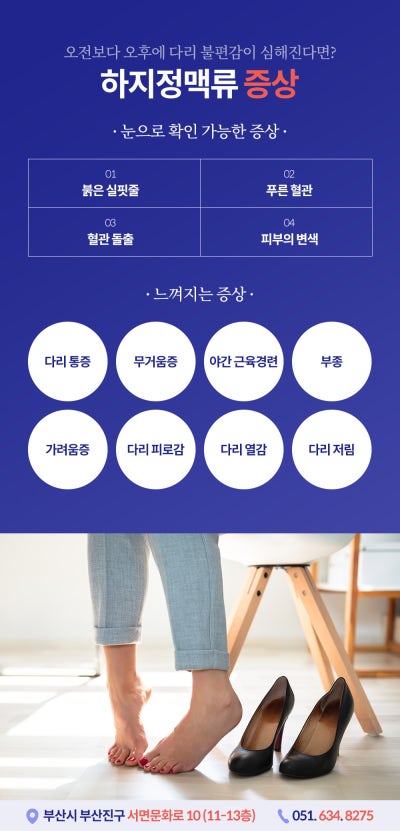
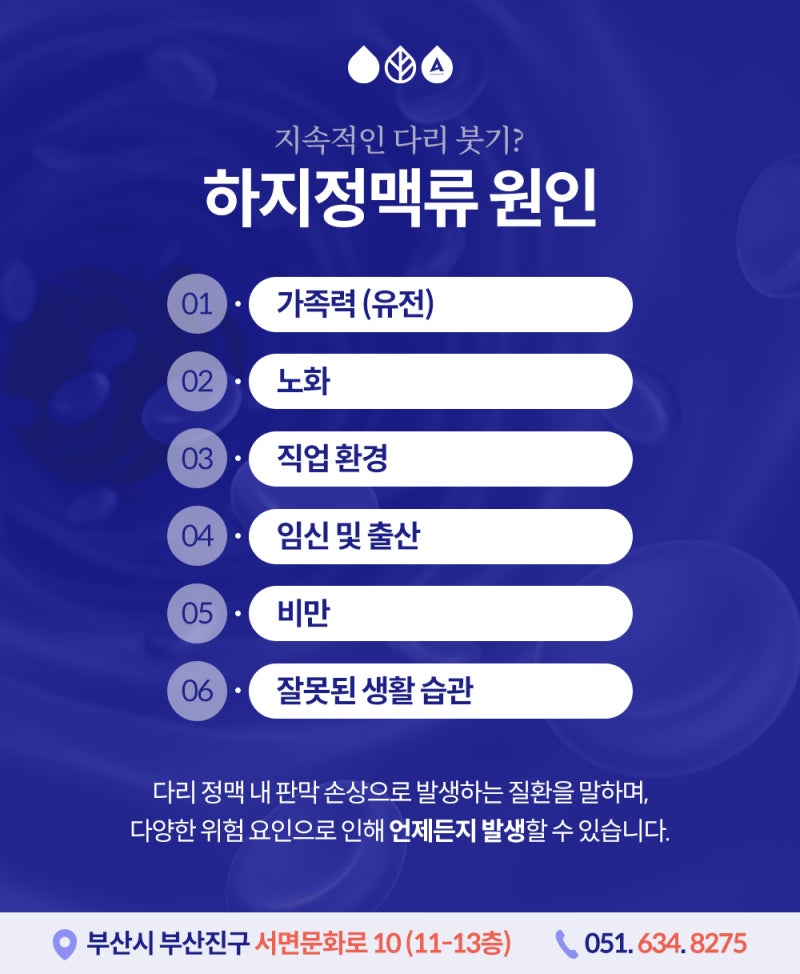
This leads to blood stagnation in the lower legs, causing the blood vessels to abnormally expand. These enlarged blood vessels can protrude visibly on the surface of the legs, or, even if not visible, they can manifest as various symptoms such as leg pain, heaviness, nocturnal muscle cramps, swelling, and leg fatigue.
Varicose veins can be caused by family history, aging, pregnancy, obesity, poor lifestyle habits, and specific occupational environments, especially prolonged sitting. Recently, due to changes in lifestyle, the incidence of varicose veins is gradually increasing even among younger age groups.
Symptoms Worsen in the Afternoon Compared to the Morning
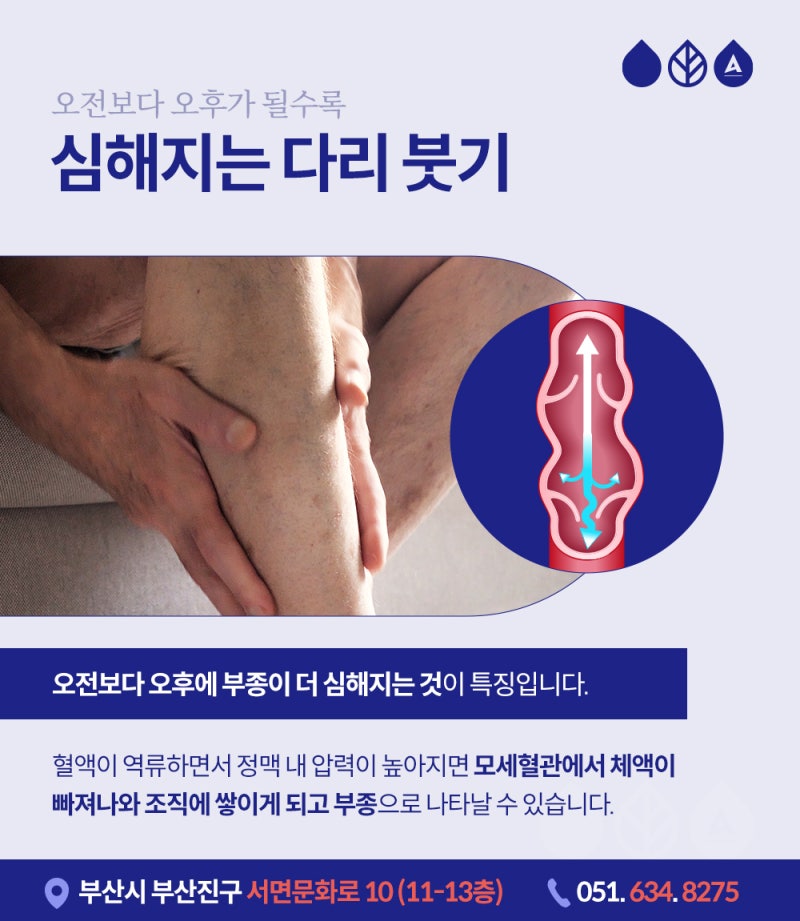
Those who sit for more than 8 hours a day often experience leg swelling. One of the reasons for swollen legs could be varicose veins.
When sitting or standing, blood in the leg veins must flow upwards to the heart, against gravity, which increases the likelihood of blood reflux or stagnation. If blood circulation is not smooth, varicose veins can develop and worsen.
Additionally, the calf muscles act like a pump, sending blood to the heart. Remaining in the same position for long periods without movement reduces the activity of these muscles, further impeding blood circulation. This is also a significant factor in the worsening of varicose veins.
Especially when standing for long periods, the pressure on the legs increases, and blood tends to pool in the lower extremities, further increasing the risk of varicose veins.
When blood refluxes and the pressure within the veins rises, fluid leaks from the capillaries and accumulates in the tissues, appearing as swelling. It is characteristic for this swelling to be more severe in the afternoon than in the morning.

What if Leg Swelling and Discomfort Persist?
Varicose veins don't just cause leg swelling. When blood stagnates and pressure within the veins increases, blood vessels expand, leading to a tingling and heavy sensation in the legs. Often, leg cramps occur at night, disrupting sleep.
In addition, overall leg fatigue and tingling sensations can accompany these symptoms, causing discomfort in daily life. Upon closer inspection of the legs, blue veins or red spider veins may be visible, or bumpy, protruding veins might be noticeable.
If you experience these symptoms or changes, it is necessary to get a diagnosis to accurately assess your current condition.
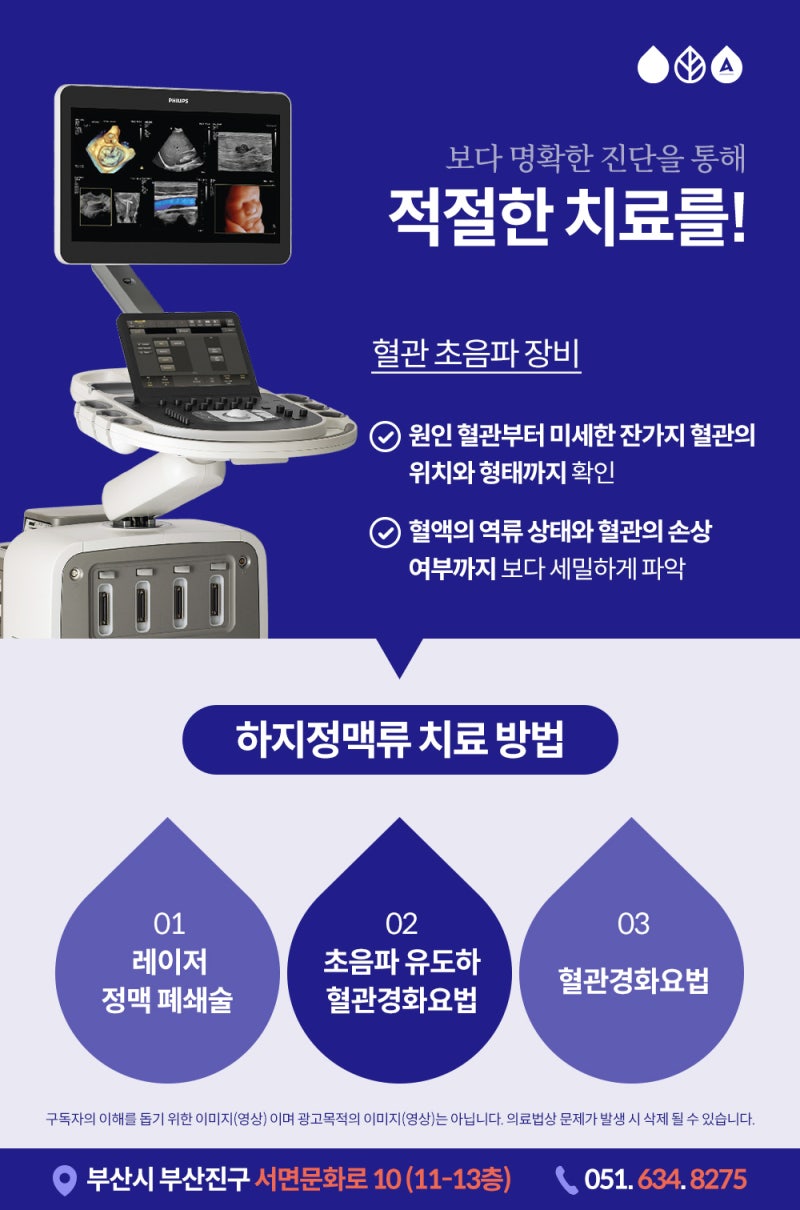
To diagnose varicose veins, which are a reason for swollen legs, a vascular ultrasound examination is performed to precisely measure blood flow and reflux time. If blood reflux time is measured at 0.5 seconds or more, it is determined that the venous valves are not functioning properly, and varicose veins are diagnosed.
In such cases, treatment to close the problematic blood vessels and allow blood to circulate smoothly through healthy vessels should be considered. Representative treatment methods include laser vein ablation and ultrasound-guided sclerotherapy, and combining these two methods depending on the affected veins can enhance their synergy.
If immediate treatment is not feasible, you can consult with a medical professional to receive a prescription for venous circulation enhancers or medical compression stockings. These can help alleviate symptoms and slow the progression of varicose veins.
Furthermore, varicose veins are a condition that requires ongoing management even after treatment. Since varicose veins can recur, regular leg check-ups at intervals of one to three years after treatment are helpful in preventing recurrence.
Occupations that involve prolonged sitting or standing
are at high risk for varicose veins.
Rather than simply dismissing recurrent leg swelling as ‘a natural symptom from standing (or sitting) for too long,’ it is important to view it as a signal to pay closer attention to your leg health.
We hope you maintain healthy and comfortable legs for a long time through small daily management and treatment.




Frequently Asked Questions
What are the main causes of leg swelling?
Prolonged sitting or standing, family history, aging, pregnancy, obesity, and poor lifestyle habits can be causes, and persistent leg swelling, in particular, can be a sign of varicose veins.
What is varicose veins?
Varicose veins is a condition where the valves in the leg veins are damaged or the blood vessels weaken, causing blood that should flow to the heart to reflux downwards into the legs, leading to abnormally enlarged blood vessels. It manifests as swelling, pain, heaviness, and nocturnal cramps.
Why does leg swelling worsen in the afternoon?
When you sit or stand for a long time, blood in the veins refluxes and stagnates, increasing pressure, and fluid leaks from capillaries into tissues and accumulates. This is why swelling tends to be more prominent in the afternoon than in the morning.
How are varicose veins diagnosed?
Vascular ultrasound is used to measure blood flow and reflux time. If the blood reflux time is 0.5 seconds or more, the venous valves are considered to be dysfunctional, and varicose veins are diagnosed.
What are the treatment options for varicose veins?
The main treatments are laser vein ablation, which closes the problematic blood vessels, and ultrasound-guided sclerotherapy, which can be combined depending on the condition of the blood vessels. If treatment is difficult, it can be managed with venous circulation improvers or medical compression stockings.
Is management necessary after treatment?
Varicose veins is a condition with a possibility of recurrence, so regular leg check-ups every 1 to 3 years after treatment to monitor the condition can help prevent recurrence.